Hidden Sugar in UK Foods: Where It Lurks and How to Spot It on Labels
Sugar Defender is a blood-sugar support supplement, a companion for anyone working on cutting the hidden sugars covered in this article.
Affiliate link, if you buy through this link we earn a commission at no extra cost to you. Always speak to your GP or a registered dietitian before starting any diet or supplement programme.
The average UK adult eats around 700g of sugar every week, nearly double what NHS guidance recommends, and the majority isn't coming from the biscuit tin.
Hidden sugar is added to hundreds of everyday UK foods, including products you would never suspect. Knowing where it lurks and how to decode a British food label is one of the most effective, low-effort changes you can make for your long-term health.
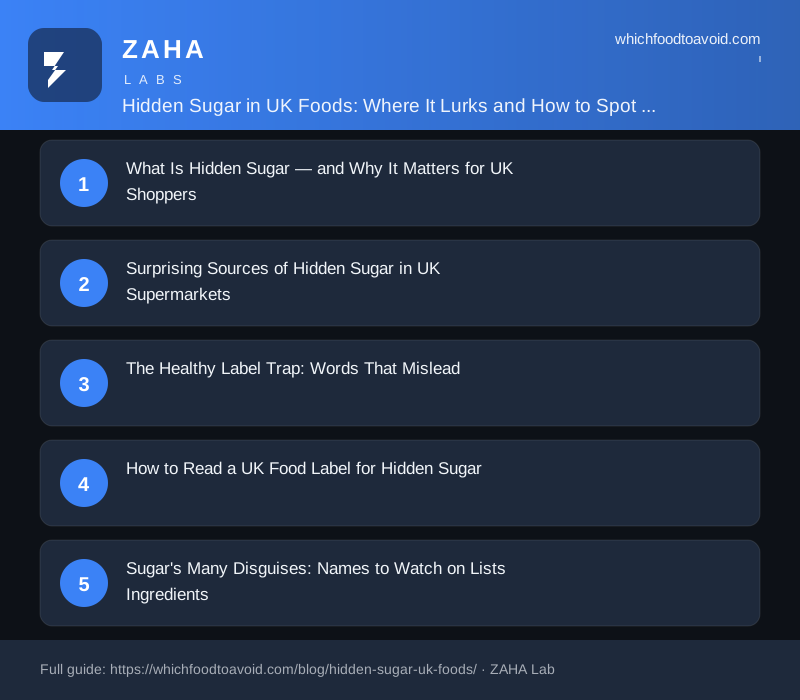
What Is Hidden Sugar, and Why It Matters for UK Shoppers
Hidden sugar doesn't mean sugar that's been smuggled in illegally, it simply refers to added sugars in products where most people don't expect to find them. We're not talking about the obvious stuff like chocolate bars or fizzy drinks. We're talking about pasta sauces, bread, flavoured yoghurts, granola, salad dressings, and even some savoury soups.
The NHS recommends that free sugars, those added to food or naturally present in honey, syrups, and fruit juices, should make up no more than 5% of your daily energy intake. For adults, that works out to roughly 30g per day, or about seven teaspoons. Many UK adults exceed this before lunchtime without realising it.
Surprising Sources of Hidden Sugar in UK Supermarkets
These are the foods most likely to catch you off guard on a weekly shop:
- Low-fat yoghurts: A single 150g pot of flavoured low-fat yoghurt, popular own-brand varieties from Tesco and Sainsbury's, or brands like Müller Light, can contain 15–19g of sugar. The fat is removed, but flavour is restored with sugar.
- Granola and cereal bars: Many supermarket granolas contain 8–12g of sugar per 45g serving. Popular branded bars, including several Nature Valley varieties, sit at around 11g per two-bar pack.
- Pasta sauces: A 125g serving of a standard supermarket Bolognese sauce can contain 6–8g of sugar. Homemade versions using tinned tomatoes and herbs contain a fraction of that.
- Flavoured water: Products like Volvic Touch of Fruit are often perceived as a healthy choice, but some varieties contain 11–13g of sugar per 500ml bottle.
- Tinned soups: Heinz Cream of Tomato contains around 10g of sugar per 300ml serving, similar to a small chocolate digestive biscuit.
- Wholemeal bread: Even wholemeal sliced bread from major brands contains around 3–4g of sugar per two slices. Not alarming in isolation, but it adds up across a day's eating.
The Healthy Label Trap: Words That Mislead
Food manufacturers are skilled at creating a health halo around products, using language that implies wholesomeness without any obligation to keep sugar low.
Watch out for these phrases in particular:
- No added sugar: A regulated claim meaning no sugar was added during manufacturing, but the product can still be high in naturally occurring sugars, as with many fruit-based drinks and squashes.
- Low fat: Under UK food labelling rules, a product qualifies as low fat if it contains 3g of fat or less per 100g, but there is no corresponding restriction on sugar content. Reduced-fat peanut butter, for instance, often contains more sugar than the full-fat version.
- Natural: Has no formal definition in UK food law when applied to ingredients. Natural cane sugar is still sugar.
- High protein: Protein shakes and bars marketed at gym-goers frequently contain 15–25g of sugar per serving.
How to Read a UK Food Label for Hidden Sugar
Most pre-packaged foods sold in the UK display a nutrition panel on the back or side of pack, plus an optional traffic light label on the front. Here is how to use both effectively:
Step 1, Check the nutrition panel per 100g. Look at the row labelled of which sugars. According to NHS guidance, a food is considered high in sugar if it contains more than 22.5g per 100g. A figure of 5g or less per 100g is low. Everything in between is moderate.
Step 2, Use the front-of-pack traffic light. Red means high, amber is medium, and green is low. For everyday staples like cereals, sauces, and drinks, aim for green or amber in the sugar column as a starting point.
Step 3, Cross-check the serving size. Nutritional data per serving can be misleading if the stated portion is unrealistically small. A cereal shown at a 30g serving may be half of what most people actually pour. Always cross-reference with the per-100g figure, which can't be manipulated by portion size.
Step 4, Scan the ingredients list. Ingredients are listed in descending order by weight. If any form of sugar appears among the first three ingredients, the product is likely high in added sugar before you've even checked the numbers.
Sugar's Many Disguises: Names to Watch on Ingredients Lists
Manufacturers use over 50 different names for sugar in ingredients lists. Familiarising yourself with the most common aliases makes label-reading considerably more reliable:
- Sucrose, glucose, fructose, dextrose, maltose, lactose
- High-fructose corn syrup, corn syrup, golden syrup, invert sugar syrup
- Fruit juice concentrate, grape juice concentrate, apple juice concentrate
- Treacle, molasses, honey, agave nectar, rice malt syrup
- Maltodextrin (metabolised similarly to sugar despite tasting almost neutral)
If several of these appear under different names in the same ingredient list, the total sugar content is likely higher than any single entry suggests, a practice sometimes called sugar splitting. The of which sugars figure in the nutrition panel always gives you the honest total, regardless of how many aliases appear in the ingredients.
Practical Swaps That Cut Hidden Sugar Without Overhauling Your Diet
Small, consistent changes to your regular weekly shop tend to work better than dramatic restrictions. These swaps cost no more than what you're likely already spending:
- Swap flavoured yoghurt for plain Greek yoghurt, Fage, Longley Farm, or any supermarket own-brand, and add fresh fruit or a small amount of honey yourself. You control exactly what goes in.
- Replace flavoured porridge sachets with plain rolled oats (Quaker Oats Original or own-brand equivalents) and sweeten with a sliced banana or a drizzle of real honey.
- Make simple pasta sauces with tinned plum tomatoes, a clove of garlic, and dried herbs rather than using jars, or choose jarred varieties with under 5g of sugar per 100g.
- Drink sparkling water with a squeeze of fresh lemon or lime instead of flavoured water or squash.
- Choose a wholegrain bread with a short ingredient list, broadly, fewer than eight ingredients is a useful rule of thumb.
Making three or four of these swaps consistently can reduce daily sugar intake by 20–40g without calorie counting, strict rules, or expensive health products.
Frequently Asked Questions
How much sugar should a UK adult have per day?
NHS guidance recommends no more than 30g of free sugars per day for adults, roughly seven teaspoons. Free sugars include all added sugars as well as those naturally found in honey, syrups, and unsweetened fruit juice. Sugars naturally present in whole fruit and plain dairy do not count toward this limit.
Is fruit sugar the same as added sugar?
Not quite. Sugars naturally contained within whole fruit are digested more slowly due to the fruit's fibre content and do not count as free sugars under NHS guidance. However, when fruit is juiced or blended into a smoothie, those sugars are released and do count, a 150ml glass of orange juice contributes around 13g of free sugar to your daily total, comparable to several teaspoons of table sugar.
What does 'no added sugar' mean on a UK food label?
It is a regulated claim meaning no sugar or sweet-tasting ingredient was added during manufacturing. However, a product carrying this label can still be high in naturally occurring sugars. Always check the of which sugars figure in the nutrition panel regardless of any front-of-pack claim.
Are sugar-free versions of foods a healthier choice?
It depends on the product. Sugar-free versions often use artificial sweeteners such as aspartame, acesulfame K, or sucralose, or bulk sweeteners like sorbitol. Current Food Standards Agency guidance considers approved sweeteners safe at typical consumption levels, though sorbitol can cause digestive discomfort at higher intakes. A sugar-free label does not automatically make a product nutritious, it is worth checking the full nutrition panel and ingredient list before assuming it is a better option.