Ultra-Processed Foods List: What They Are, Which Products Qualify, and How to Cut Back
The Smoothie Diet turns whole-food swaps into a structured 21-day plan — an easy on-ramp if you want to move from reading to doing.
Affiliate link — if you buy through this link we earn a commission at no extra cost to you. Always speak to your GP or a registered dietitian before starting any diet or supplement programme.
More than 57% of calories in the average American adult's diet come from ultra-processed foods, according to a 2016 analysis in the BMJ. That number is not a rounding error. Ultra-processed foods are industrially manufactured products loaded with additives a home cook would never use: artificial flavors, emulsifiers, and color stabilizers. Cutting back is one of the most direct dietary changes you can make within the 2020-2025 Dietary Guidelines for Americans.
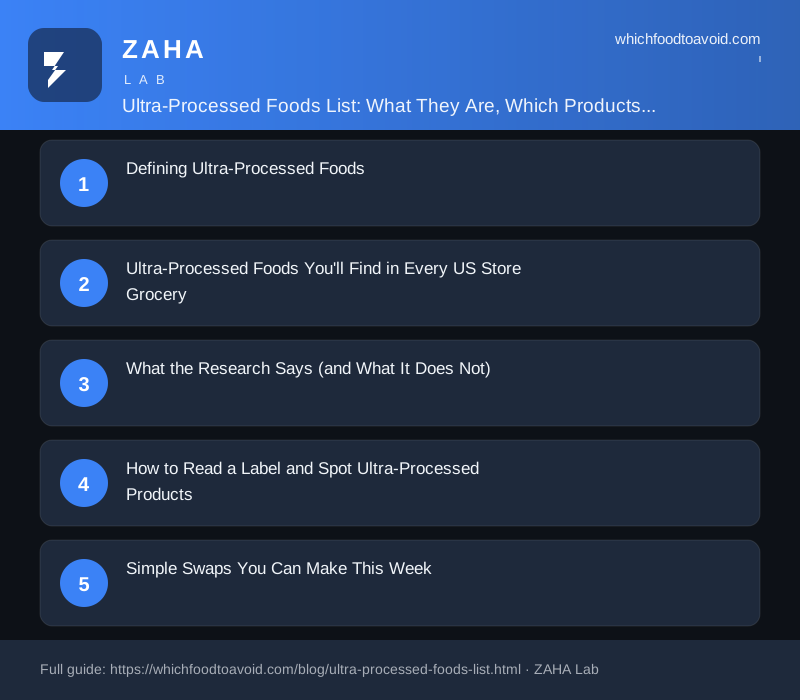
Defining Ultra-Processed Foods
The NOVA classification system, developed by researchers at the University of Sao Paulo, groups foods into four categories based on the degree of industrial manipulation involved. Group 4, the ultra-processed tier, covers products assembled from multiple ingredients, at least one of which is an industrial additive you would never find in a grocery store: sodium stearoyl lactylate, high-fructose corn syrup, or carrageenan, for instance.
Plain canned tomatoes are Group 2. A bag of Cool Ranch Doritos is Group 4. The distinction matters for a specific reason: industrial additives like flavor enhancers and texture stabilizers are engineered to make products fast to eat and easy to overeat, regardless of fat or sodium content.
Ultra-Processed Foods You'll Find in Every US Grocery Store
Based on NHANES dietary data, these categories contribute the most ultra-processed calories to American diets:
- Packaged breads and rolls (Wonder Bread, most store-brand white sandwich loaves)
- Flavored snack chips (Lay's, Cheez-Its, Goldfish crackers)
- Sweetened cereals (Froot Loops, Lucky Charms, Honey Smacks)
- Processed meats (Oscar Mayer bologna, Tyson frozen nuggets, hot dogs)
- Flavored yogurts with additives (many Yoplait varieties contain modified food starch)
- Carbonated soft drinks and energy drinks (Coca-Cola, Monster Energy)
- Packaged baked goods (Oreos, Hostess Twinkies, Little Debbie snack cakes)
- Instant noodles and flavored pasta mixes (Maruchan Ramen, Kraft Mac and Cheese)
A single serving of any one of these is not acutely harmful. The concern is how much of your daily calorie budget they consume over months and years.
What the Research Says (and What It Does Not)
The 2020-2025 Dietary Guidelines for Americans do not use the term ultra-processed, but USDA guidance consistently steers Americans away from foods high in added sugars, sodium, and saturated fat. That description fits the vast majority of ultra-processed products. Observational studies in JAMA Internal Medicine and the British Medical Journal have linked higher ultra-processed food intake to increased risks of obesity, type 2 diabetes, and cardiovascular disease. Confounding is a real issue in this research: people who eat more ultra-processed food also tend to smoke more, sleep less, and exercise less.
A 2019 randomized controlled trial conducted by NIH researchers offered stronger evidence. Participants randomly assigned to an ultra-processed diet consumed about 500 extra calories per day compared to those eating minimally processed food, even though both diets were matched for fat, sugar, and fiber content. Eating speed and reduced satiety drove most of the difference.
How to Read a Label and Spot Ultra-Processed Products
The ingredient list is more informative than the nutrition facts panel. Two quick checks will flag most ultra-processed products at the supermarket.
Count the ingredients. More than 10 is a soft flag. More than 15 is a strong one.
Look for industrial additives. Modified food starch, artificial flavors, sodium nitrite, carrageenan, polysorbate 80, and synthetic dyes like Red 40 or Yellow 5 are reliable indicators.
Health halos complicate the picture. Clif Bars contain brown rice syrup, soy protein isolate, and natural flavors. By NOVA criteria they are Group 4 products, even though they are marketed as athletic nutrition. The front of a package rarely tells the full story.
Simple Swaps You Can Make This Week
Pick one category where you currently eat ultra-processed foods daily. Swap it for a minimally processed alternative. Hold that change for two weeks before adding another.
- Instead of Lay's Classic chips (about $4.50 for a 7.75 oz bag): air-popped popcorn with salt and nutritional yeast. A $2.50 bag of raw kernels makes roughly 16 servings.
- Instead of Yoplait Strawberry Lowfat Yogurt (7g added sugar, modified food starch included): Fage 0% plain Greek yogurt with sliced fresh strawberries. Similar price at Walmart or Target, with no industrial additives.
- Instead of Kraft Mac and Cheese: cook pasta from a $1.50 box and stir in shredded real cheddar with a splash of milk. It takes four extra minutes, total.
- Instead of Oscar Mayer Classic Beef Hot Dogs: grilled chicken thighs or turkey burgers from ground turkey, available in most supermarket meat sections for $4 to $6 per pound. Less sodium nitrite, more protein per calorie.
How Much Ultra-Processed Food Is Too Much?
No universally agreed limit exists. The Dietary Guidelines for Americans recommend keeping added sugars below 10% of daily calories and sodium under 2,300 mg per day. Both targets become hard to reach when ultra-processed foods dominate your diet. A practical working goal: keep ultra-processed products below 20% of your daily calorie intake. That still leaves room for the occasional bag of chips or bowl of sweetened cereal.
Replace one ultra-processed item per week. Track how you feel after 30 days. That is a specific, testable change, not an all-or-nothing overhaul.
Frequently Asked Questions
Are all processed foods ultra-processed?
No. Processing covers a wide spectrum. Frozen plain peas are processed (blanched and flash-frozen) but contain no additives. Ultra-processed products are distinguished by industrial formulation, not by being packaged or convenient. Canned beans in water, plain rolled oats, and most plain frozen vegetables are not ultra-processed.
Is store-bought bread ultra-processed?
Most commercial sandwich breads in US supermarkets qualify as ultra-processed because they contain additives like calcium propionate, DATEM, or monoglycerides. Breads with five or fewer ingredients (flour, water, yeast, salt, and oil) generally do not. Read the ingredient list rather than relying on whole grain or multigrain claims printed on the front of the package.
What about protein bars and meal replacement shakes?
Most are ultra-processed. Clif Bars, Premier Protein shakes, and similar products contain soy protein isolate, artificial or natural flavors, or added emulsifiers. A hard-boiled egg and a banana costs less, provides more micronutrients, and contains no industrial additives. If you rely on bars for convenience, look for products with five or fewer recognizable ingredients.
Can children eat ultra-processed foods at all?
The 2020-2025 Dietary Guidelines for Americans recommend limiting added sugars to under 10% of daily calories for anyone over 2 years old. Occasional ultra-processed foods are not acutely harmful for children. The concern is frequency: when ultra-processed snacks and drinks regularly displace vegetables, fruit, and whole grains, nutrient gaps accumulate over time.