Ultra-Processed Foods UK: What They Are, Why They Matter, and 6 Easy Swaps
The Smoothie Diet turns whole-food swaps into a structured 21-day plan, an easy on-ramp if you want to move from reading to doing.
Affiliate link, if you buy through this link we earn a commission at no extra cost to you. Always speak to your GP or a registered dietitian before starting any diet or supplement programme.
More than half of the average British adult's daily calories now come from ultra-processed foods, a figure that has prompted serious attention from nutrition researchers and public health bodies. Ultra-processed foods (UPFs) are industrially manufactured products made from substances rarely found in a home kitchen, and knowing what they are is the first step to eating fewer of them.
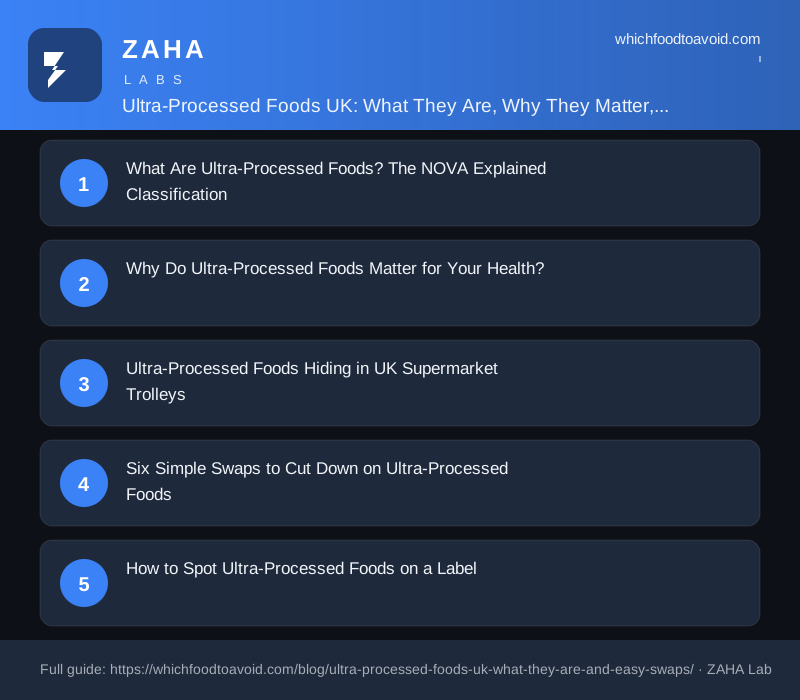
What Are Ultra-Processed Foods? The NOVA Classification Explained
The term comes from the NOVA classification system, developed by Brazilian nutrition researchers and now widely used in academic literature. NOVA divides all foods into four groups based on the extent and purpose of their industrial processing:
- Group 1, Unprocessed or minimally processed: Fresh fruit and vegetables, plain meat, fish, eggs, plain milk, and plain yoghurt.
- Group 2, Processed culinary ingredients: Oils, butter, flour, sugar, and salt, things you cook with, not eat directly.
- Group 3, Processed foods: Tinned fish in brine, cured meats, hard cheese, freshly baked bread from a bakery.
- Group 4, Ultra-processed foods: Products whose ingredient lists include additives such as emulsifiers, humectants, flavour enhancers, colourings, and sweeteners, substances you would not add when cooking at home.
A practical rule of thumb: if the ingredient list contains items you could not buy in a standard supermarket or would not recognise as food, you are likely looking at a UPF.
Why Do Ultra-Processed Foods Matter for Your Health?
The evidence is still developing, and it is important not to overstate the risks. That said, a growing body of large observational research, including UK-based cohort studies, has linked high UPF intake to greater risk of obesity, type 2 diabetes, cardiovascular disease, and depression. A 2023 umbrella review published in The BMJ identified associations between UPF consumption and more than 30 adverse health outcomes.
NHS guidance does not yet use the NOVA classification directly, but it does advise limiting foods high in saturated fat, added sugar, and salt, categories that overlap substantially with ultra-processed foods. Researchers suspect the concern goes beyond individual nutrients: UPFs are often engineered to be hyper-palatable, making them easy to overeat, and some additives may interact with gut health in ways that are still being studied.
Perhaps the most straightforward problem is displacement. A ready meal eaten five nights a week leaves little room on the plate for vegetables, wholegrains, and lean protein.
Ultra-Processed Foods Hiding in UK Supermarket Trolleys
Not all UPFs are obviously junk food. Many are products British households consider healthy or at least neutral staples:
- Sliced bread: Most pre-packaged loaves from Hovis, Warburtons, and supermarket own-brands contain emulsifiers (such as E472e) and preservatives absent from a home-baked or bakery loaf.
- Flavoured yoghurts: Müller Corner and similar products often include modified starches, added flavourings, and sugar. Plain Greek yoghurt is a Group 1 food.
- Breakfast cereals: Even options marketed as wholegrain, certain varieties of Kellogg's Bran Flakes or Nestlé Cheerios, contain added flavourings and fortification packages that push them into UPF territory.
- Plant-based meat alternatives: Quorn nuggets, most supermarket own-brand vegan sausages, and some Beyond Burger products carry long additive lists despite their health-conscious positioning.
- Protein bars and diet shakes: Frequently marketed as weight-management aids, these typically contain multiple emulsifiers, artificial sweeteners, and flavourings.
- Chilled ready soups: Even fresh-looking supermarket soups from the chilled aisle regularly include stabilisers, modified starch, and flavour enhancers.
This is not about demonising any single product. A slice of Warburtons is not nutritionally equivalent to a multipack of crisps. But awareness of how often UPFs appear helps you make more deliberate choices.
Six Simple Swaps to Cut Down on Ultra-Processed Foods
You do not need to overhaul your diet in one go. Small, consistent substitutions accumulate meaningfully over time:
- Bread: A bakery loaf or genuine sourdough (ingredients: flour, water, salt, starter) instead of pre-packaged sliced bread. Many Greggs and independent bakeries sell a usable everyday loaf.
- Breakfast: Plain porridge oats, Quaker Original, not the flavoured sachets, with fresh or frozen fruit, rather than branded breakfast cereals.
- Yoghurt: Full-fat plain yoghurt or Greek yoghurt (Fage, Yeo Valley Natural, or any supermarket own-brand plain variety) with your own honey or berries instead of flavoured pots.
- Snacks: A handful of unsalted mixed nuts, a piece of fruit, or plain oatcakes with single-ingredient peanut butter rather than branded cereal bars or flavoured rice cakes.
- Ready meals: When convenience is non-negotiable, look for shorter ingredient lists. M&S and Waitrose tend to use fewer additives than budget lines. Batch-cooking a simple chilli or pasta sauce on a Sunday covers four or five weeknight meals.
- Drinks: Plain sparkling water with a slice of lemon or lime instead of flavoured sparkling waters or diet fizzy drinks, diet versions are still UPFs regardless of their calorie count.
How to Spot Ultra-Processed Foods on a Label
You do not need to memorise NOVA categories in the supermarket aisle. Use this quick check:
- Ingredient count: More than five to seven ingredients is a useful prompt to look more closely.
- E numbers in clusters: Not all E numbers are harmful, some are natural colourings or vitamins, but a run of emulsifiers (E471, E472, E476), sweeteners (E950, E951), or flavour enhancers (E621) strongly signals a UPF.
- Vague processing terms: "Natural flavouring," "modified starch," "hydrolysed vegetable protein", these are processing markers even when they sound benign.
- Traffic light labels: The UK's traffic light nutrition label does not capture processing level. A product can be green across all categories and still be ultra-processed. Use it for fat, sugar, and salt guidance, but not as a proxy for how industrially made something is.
A practical habit worth building: spend 20 seconds on the ingredients list before the nutrition panel. The nutrition panel tells you what is in it; the ingredients list tells you what it is.
Frequently Asked Questions
Are ultra-processed foods always unhealthy?
Not necessarily, and the science does not support a blanket prohibition. The main concern is regular, high-volume consumption that displaces whole foods, not the occasional packet of crisps or a cereal bar on a long train journey. NHS guidance consistently focuses on overall dietary patterns rather than individual foods.
Is wholemeal sliced bread an ultra-processed food?
Most supermarket wholemeal bread qualifies as ultra-processed under NOVA because of added emulsifiers and preservatives. That said, it is nutritionally far better than many other UPFs and provides useful fibre. If you eat bread every day, switching to a bakery loaf is a worthwhile swap; if you eat it occasionally, it is low priority compared to higher-impact changes.
Do ultra-processed foods cause cancer?
Some large observational studies have found associations between high UPF intake and certain cancers, but association is not causation. Confounding factors, overall diet quality, lifestyle, socioeconomic status, make it very difficult to isolate UPFs as a direct cause. Cancer Research UK recommends a diet rich in fruit, vegetables, wholegrains, and fibre, which naturally limits UPF intake without requiring alarming language.
How much is too much when it comes to ultra-processed foods?
There is no agreed safe daily threshold. Current research suggests that deriving more than around 20–25% of daily calories from UPFs is associated with measurable health risks, but individual context matters. A practical goal is to build most meals around minimally processed foods, meat, fish, eggs, legumes, vegetables, whole grains, and let UPFs fill the gaps rather than form the foundation of your diet.